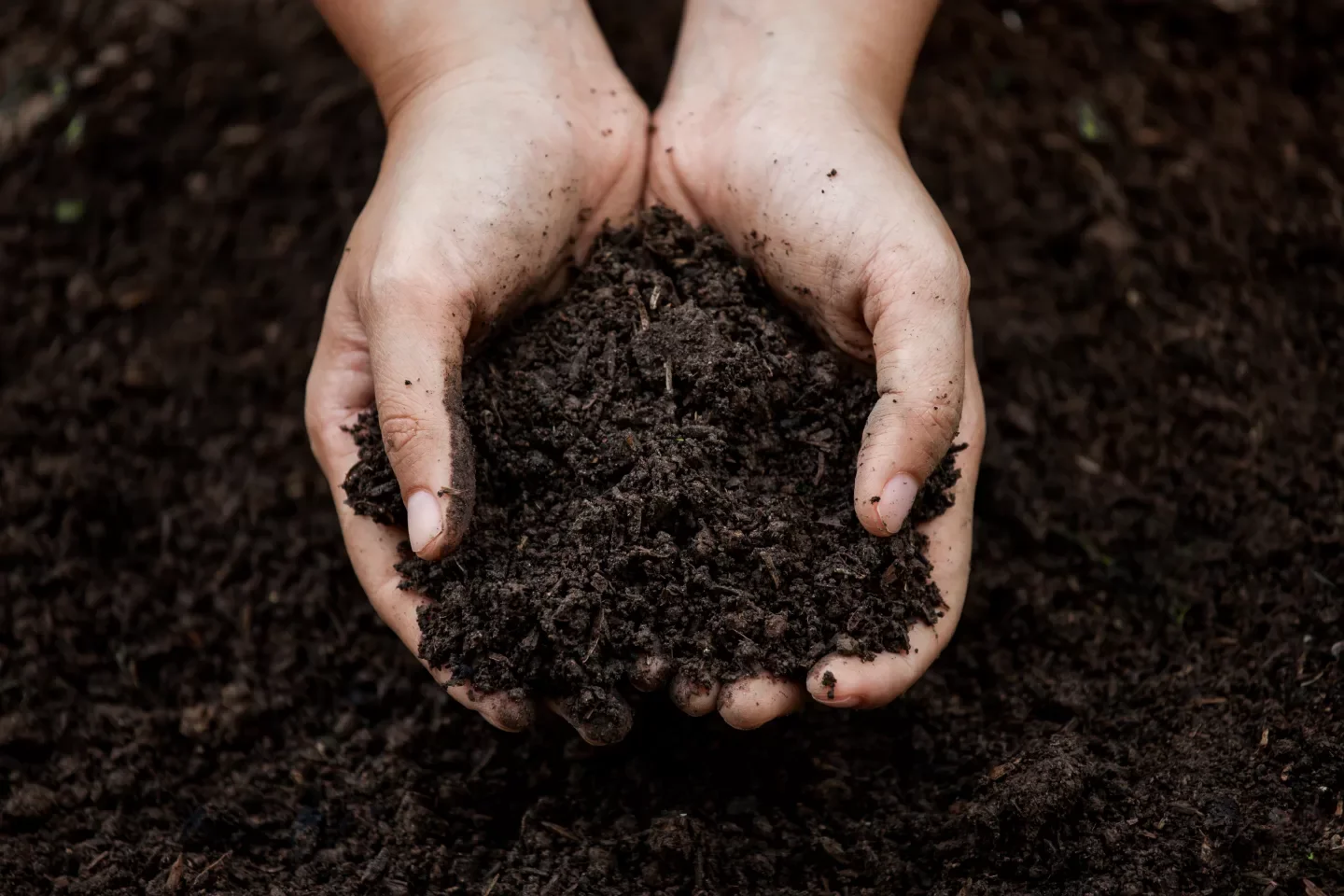
When composting, it’s important to keep the right balance of green and brown materials for a healthy, productive pile. Green materials, also known as nitrogen-rich materials, are usually wet: fruit and vegetable scraps, coffee grounds and grass clippings. Brown materials, also known as carbon-rich materials, are usually dry: leaves, straw and wood chips.
A good rule of thumb is roughly two to three parts brown materials to one part green. That gives enough nitrogen to feed the beneficial microorganisms that break down organic matter, and enough carbon to absorb extra moisture and stop the pile from getting too wet.
Build a happy compost pile
Add greens and browns and watch the balance meter.
The ideal ratio can vary with the size of your pile, the type of organic matter you’re composting and the climate where you live. If you’re composting a lot of wet fruit and vegetable scraps, for example, you may need more browns to soak up moisture and keep the balance.
Beyond the ratio, think about the size and location of your pile, how often you turn and aerate it, and whether to use additives like compost accelerators or worms.
The key is to experiment, keep an eye on moisture and temperature, and adjust as you go. By composting responsibly and keeping the right balance, we reduce waste, improve soil and build a more sustainable future for ourselves and our planet.